
SafetyPlanning
Critical Fall Height and Safety Zones: Two Foundations of Playground Planning
2 min readAsilsanpark

We explain free fall height, critical fall height and safety zones with examples. Essential reading before you plan your play area.
When planning a play area, the two terms you will hear most often are fall height and safety zone. Understanding them properly helps you choose the right product and use your space efficiently.
What is free fall height?
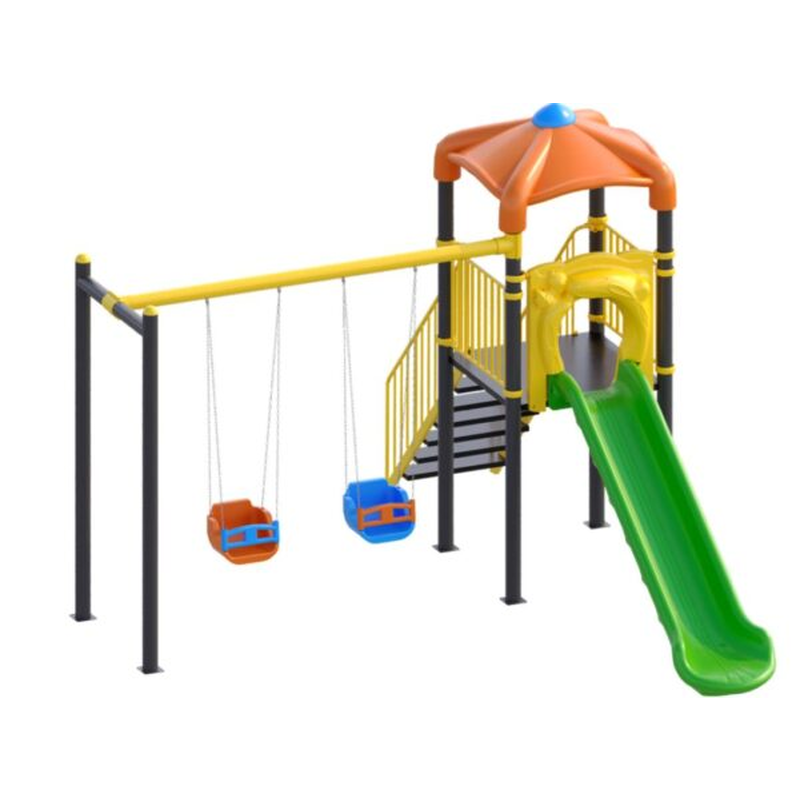
It is the vertical distance from the highest point a child can stand on or hold onto down to the ground. For example, on a platform 150 cm high, the platform surface is the starting point of this measurement.
What is critical fall height?
It is the maximum fall height at which a surface keeps the risk of serious head injury within acceptable limits. The critical fall height of the surface must not be lower than the free fall height of the equipment on it. This value depends on the type and thickness of the surface; for rubber surfaces, the manufacturer’s test values apply.
What is a safety zone?
It is the area around the equipment where a child could fall or that a child could reach while the equipment moves (such as a swing). Within this area:
- There must be no other equipment, benches, trees or litter bins,
- The ground must be covered with impact-absorbing material suited to the equipment’s fall height,
- For moving equipment (swings, spring riders, carousels) the zone extends in the direction of movement.
As a general rule, for low equipment this zone is taken as at least 1.5 metres in every direction, and it grows with height. Exact dimensions for each type of equipment are defined in the standard.
Practical planning tips
- When measuring your site, account not only for the equipment itself but also for its safety zones.
- Place swings away from footpaths and entrances.
- Where possible, put equipment for younger and older children in separate zones.
Share your site dimensions and we can prepare a layout proposal that includes the safety zones: Quote form.